
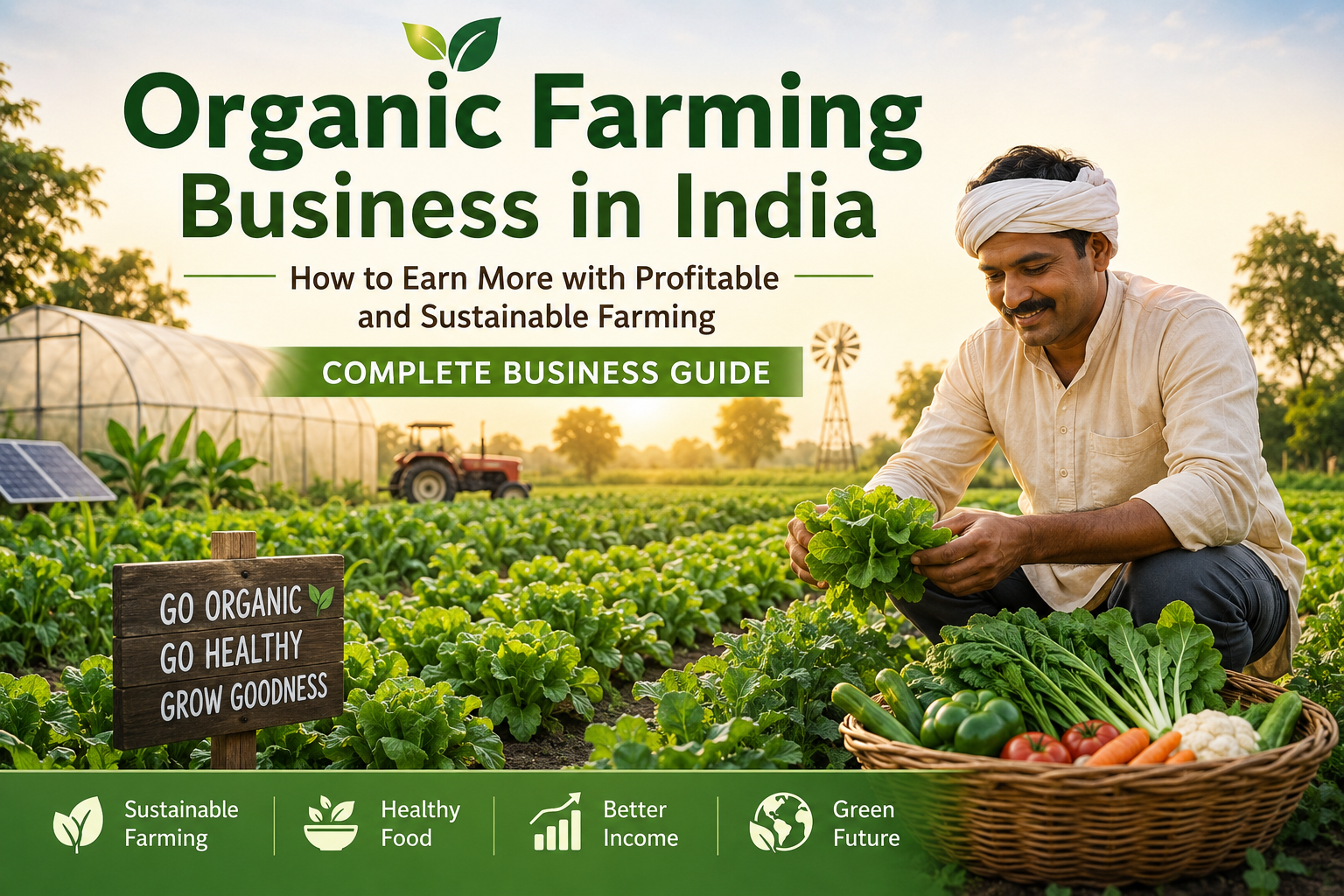
Organic Farming Business in India: How to Earn More with Profitable and Sustainable Farming
Organic Farming Business in India: How to Earn More with Profitable and Sustainable Farming
An Organic Farming Business in India can be a practical opportunity for farmers, landowners, and agricultural entrepreneurs who want to build a sustainable source of income. Organic farming focuses on healthy soil, natural farming inputs, responsible water use, and crops grown with careful attention to the environment. With proper planning, farmers can sell fresh produce, grains, pulses, spices, fruits, vegetables, herbs, and value-added food products directly to consumers and local markets.
What Is Organic Farming?
Organic farming is a method of agriculture that focuses on natural processes and responsible farm management. Instead of depending heavily on synthetic fertilizers and chemical pesticides, farmers use practices such as composting, crop rotation, organic manure, mulching, natural pest management, and biological inputs.
The goal is not simply to grow crops without chemicals. A successful organic farm also needs healthy soil, good water management, suitable crops, proper farm planning, and a reliable market.
For beginners, starting small can make the process easier. Farmers can first understand their soil, local climate, available water, customer demand, and suitable crops before expanding the farm.
How to Start an Organic Farming Business in India
Starting an organic farming business requires planning before planting the first crop. Begin by studying the land and understanding its soil condition. Soil testing can help identify important factors such as nutrient levels and soil characteristics.
Next, choose crops that suit the local climate and have a realistic market demand. Vegetables, pulses, grains, spices, herbs, fruits, and traditional crops can offer different opportunities depending on the region.
Farmers should also plan their water supply, seeds, organic inputs, labour, storage, packaging, transportation, and selling channels. A simple cost calculation can help determine how much money the farm may require before production begins.
It is also important to understand applicable organic farming standards and certification requirements if you plan to market products as certified organic. Requirements can vary depending on the market and the type of product being sold.
How to Earn from Organic Farming in India
There are several ways to generate income from organic agriculture. Selling fresh crops directly to customers can provide an opportunity to build stronger relationships with buyers. Farmers can sell vegetables, fruits, grains, pulses, spices, and other farm products through local markets, farm shops, community groups, retailers, or online channels.
Another opportunity is value addition. Instead of selling only raw produce, farmers can process suitable crops into products such as flour, spice blends, pickles, dried foods, jaggery products, herbal powders, or other packaged food items.
This approach can create additional business opportunities because the farmer is no longer dependent only on the price of raw agricultural produce.
Profitable Organic Farming Business Ideas
The best farming business idea depends on location, climate, land size, investment, labour availability, and customer demand. Farmers should avoid choosing a crop only because someone else achieved good returns from it.
Vegetable farming can work well near urban markets where consumers regularly purchase fresh produce. Herbs and spices can provide opportunities where there is strong local or commercial demand. Pulses and traditional grains can also become attractive options when farmers have suitable land and access to buyers.
Farmers can also explore mixed farming. Growing multiple crops can spread production risk and provide different sources of income throughout the year.
How to Increase Organic Farming Income
Good production alone does not guarantee a successful farming business. Farmers also need a smart selling strategy.
One useful approach is direct selling. Selling directly to consumers can help farmers understand customer preferences and develop repeat buyers. Farmers can also create simple packaging and a recognizable farm brand when the product and market support it.
Value addition can further improve business opportunities. For example, a farmer growing spices may consider cleaning, drying, grinding, and packaging them instead of selling only raw produce.
Reducing unnecessary expenses is equally important. Farmers should track spending on seeds, labour, irrigation, transportation, packaging, and other inputs. Keeping proper records makes it easier to understand which crops and activities generate better returns.
Building a Farm-to-Home Business
A farm-to-home model can connect farmers directly with consumers. Instead of moving products through several intermediaries, farmers can build relationships with households, local stores, restaurants, or online customers.
Fresh vegetables, grains, pulses, spices, jaggery, and other suitable farm products can be offered according to customer demand. Consistent quality, clean packaging, transparent information, and reliable delivery can help build customer trust.
Farmers can also use social media and digital platforms to show their farming practices, introduce seasonal products, and communicate directly with customers.
Common Mistakes to Avoid
New farmers often make mistakes by selecting crops without researching demand, investing too much money at the beginning, ignoring soil health, or depending on a single buyer.
Another common mistake is focusing only on production and forgetting marketing. A profitable farm needs both good agricultural practices and a realistic selling plan.
Start with manageable production, monitor costs, learn from each season, and expand when the business model becomes more stable.
Conclusion
An Organic Farming Business in India can become a sustainable agricultural opportunity when farmers combine suitable crops with healthy soil management, careful cost planning, effective marketing, and value addition. How to Earn from Organic Farming in India depends on more than simply growing crops; it also depends on choosing the right market, reducing unnecessary costs, developing customer relationships, and creating products that people genuinely want.
With proper planning and consistent effort, organic farming can become more than a method of cultivation. It can develop into a complete farm business that connects healthy agriculture with consumers and creates long-term opportunities for farmers.