Mango Pickle: Traditional Indian Recipe, Ingredients, Making Process and Health Benefits
Mango pickle is one of the most loved traditional foods in Indian homes. Known as Aam Ka Achar, this tangy, spicy and flavorful pickle adds a special taste to simple meals. From rice and dal to roti and paratha, a small serving of mango pickle can make an everyday meal more enjoyable.
A good Indian mango pickle starts with the right raw mangoes, fresh spices, good-quality oil and proper preparation. Although many families follow their own recipe, the basic traditional method remains quite simple. The quality of the ingredients and cleanliness during preparation can make a major difference to the final pickle.
What Is Mango Pickle?
Mango pickle is traditionally prepared using raw green mangoes, salt, spices and oil. Depending on the region, people may use different spice combinations and preparation methods. Some recipes are mild and aromatic, while others are hot, sour and strongly spiced.
A traditional raw mango pickle usually develops its characteristic taste after the mango pieces sit with salt, spices and oil for some time. This resting period allows the ingredients to blend and the mango pieces to absorb the flavors.
That is why a homemade pickle often tastes different from a freshly mixed mango and spice combination. Time plays an important role in developing the traditional flavor.
Choosing the Right Mangoes
The first and most important step in a mango pickle recipe is choosing suitable raw mangoes. Firm, fresh and properly mature green mangoes are generally preferred for pickling.
The mangoes should have a good sour taste and firm flesh. Very soft or overripe mangoes are not ideal for a traditional pickle because they can become mushy during preparation and storage.
Before cutting the mangoes, check them carefully. Remove any damaged or spoiled portions. Then wash the mangoes thoroughly with clean water and allow them to dry properly.
Moisture is an important factor in pickle making. Therefore, the mangoes should be completely dry before moving to the next stage.
Preparing the Raw Mangoes
Once the mangoes are clean and dry, cut them into suitable pieces. Traditionally, mango pieces may be prepared with the skin and the hard inner stone portion handled according to the chosen recipe.
The size of the pieces can also affect the final result. Pieces that are too small may soften quickly, while larger pieces can take more time to absorb the spices and oil.
After cutting, keep the mango pieces in a clean and dry container. At this stage, cleanliness is essential because unwanted moisture or contamination can affect the quality and shelf life of homemade mango pickle.
Mango Pickle Ingredients
A traditional mango pickle recipe does not require a long list of complicated ingredients. However, the spice combination gives the pickle much of its characteristic aroma and taste.
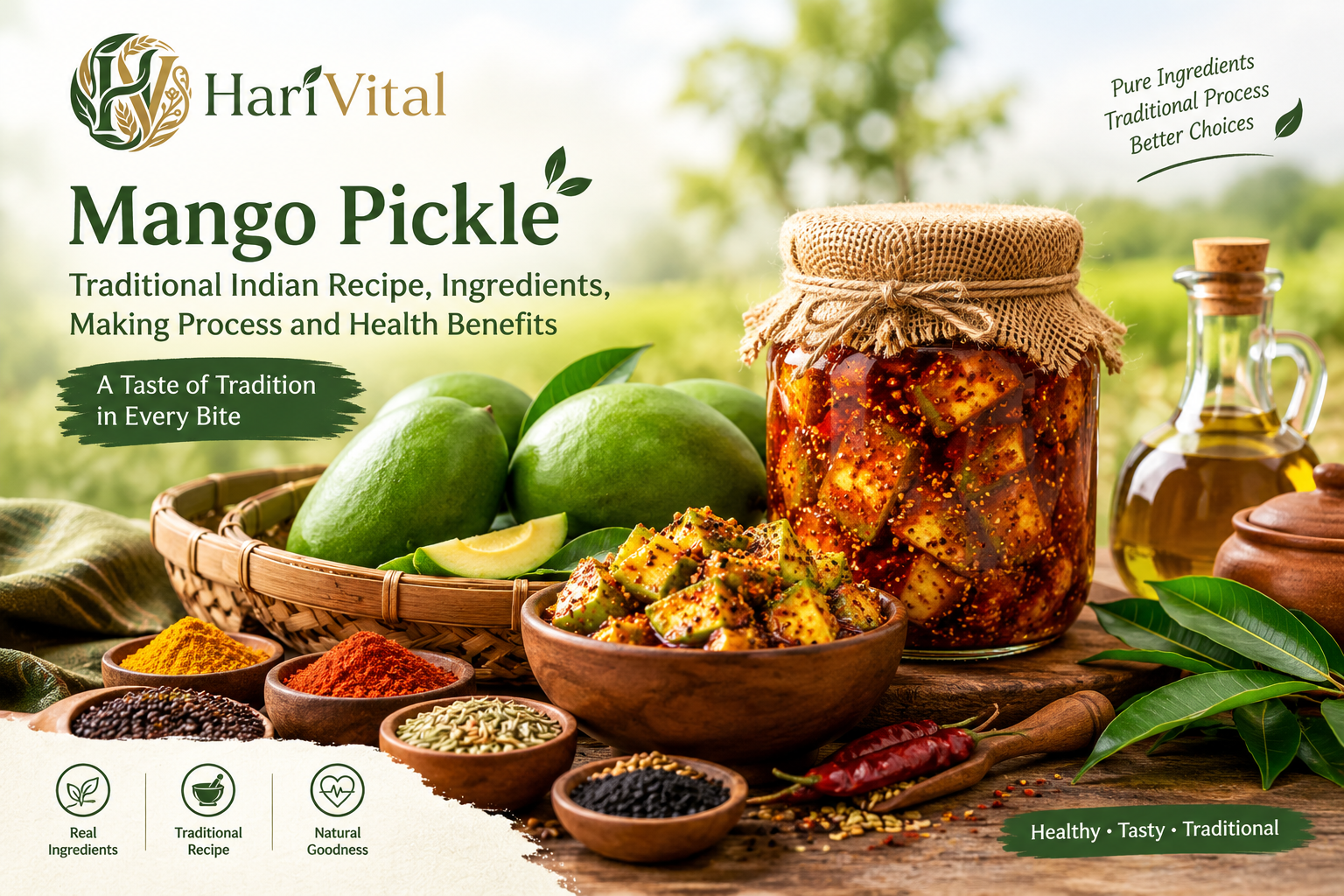
Common mango pickle ingredients include:
- Raw green mangoes
- Salt
- Red chilli powder
- Turmeric powder
- Mustard seeds
- Fenugreek seeds
- Fennel seeds
- Nigella seeds
- Asafoetida
- Mustard oil
Some regional recipes may also include other spices. The exact combination can be changed according to local food traditions and personal taste.
The important point is to use fresh, clean and good-quality spices. Old spices may lose their aroma, while poor-quality ingredients can affect the overall flavor of the pickle.
Preparing the Traditional Spice Mix
The spice mixture is one of the most important parts of a traditional mango pickle. Mustard seeds provide a sharp, characteristic flavor, while fenugreek adds a slightly bitter and earthy note. Fennel brings a mild sweetness and aroma, and nigella seeds add another layer of traditional pickle flavor.
Red chilli powder provides heat and color, while turmeric contributes its familiar golden appearance. A small amount of asafoetida can also add a distinctive savory aroma.
The spices should be prepared carefully. Whole spices can be lightly roasted when the particular recipe calls for it, but they should not be burned. Excessive heating can reduce their aroma and create an unpleasant taste.
Once prepared, the spice mixture can be combined with salt and the other ingredients before mixing it with the raw mango pieces.
Adding Oil to Mango Pickle
Oil is another important part of the mango pickle making process. Traditionally, mustard oil is widely used in many Indian pickle recipes because it provides a strong aroma and pairs well with sour raw mangoes and spices.
However, different regions and households may use different oils. The choice can depend on the recipe, local tradition and personal preference.
If mustard oil is used, it is commonly heated according to the recipe and then allowed to cool to the required temperature before being added. The oil should not be added carelessly while extremely hot, especially when it comes into direct contact with spices or mango pieces.
The goal is to coat the mango pieces well with the spice mixture and oil.
Mixing and Resting the Pickle
After preparing the mango pieces, spices and oil, combine everything thoroughly in a clean, dry container. Each mango piece should receive a good coating of the spice mixture.
This is where the traditional mango pickle making process begins to develop its characteristic taste.
After mixing, the pickle needs time to rest. During this period, the mango pieces gradually absorb the salt, spices and oil. The sourness of the raw mango combines with the heat of the chilli and the aroma of the spices.
The exact resting time can vary depending on the recipe and environmental conditions. Some traditional methods allow the pickle to mature for several days or longer before it reaches the desired flavor.
For this reason, patience is an important part of making homemade mango pickle.
Keeping Mango Pickle Clean and Dry
Proper handling is essential throughout the mango pickle recipe. Use clean, completely dry utensils and a dry storage container. Avoid introducing wet spoons, water or other sources of moisture into the pickle.
A clean preparation process helps maintain the quality of the pickle during storage.
Once the mango pickle has been prepared and stored correctly, it can gradually develop a deeper aroma and more balanced flavor. The combination of sour raw mango, traditional Indian spices and oil creates the familiar taste that makes Aam Ka Achar such a popular part of Indian food culture.
A well-prepared mango pickle is more than just a spicy side dish. It is a traditional part of Indian food culture and has been prepared in different forms across generations. The combination of raw mangoes, spices, salt and oil creates a strong balance of sour, spicy and aromatic flavors.
However, like any other food, mango pickle is best enjoyed in moderation. Its nutritional profile depends on the ingredients, recipe and quantity consumed.
Mango Pickle Benefits
One of the main reasons people enjoy Aam Ka Achar is its strong and distinctive flavor. Even a small serving can add sourness, spice and aroma to a simple meal.
Raw mangoes naturally contain nutrients such as vitamin C and other plant compounds. Spices used in a traditional mango pickle, including mustard, fenugreek, fennel, turmeric and nigella, also contribute different natural compounds and flavors to the recipe.
Because traditional recipes use several spices, homemade mango pickle can offer a variety of ingredients in a small serving. However, the exact nutritional value depends on the recipe and preparation method.
It is important to understand that mango pickle should not be considered a medicine or a treatment for any health condition. Instead, it can be enjoyed as a flavorful part of a varied and balanced diet.
Health Benefits of Mango Pickle: What Should You Know?
When discussing the health benefits of mango pickle, it is important to keep realistic expectations.
Raw mangoes provide nutrients, while traditional spices add flavor and naturally occurring plant compounds. Some spices commonly used in mango pickle ingredients, such as turmeric, mustard and fenugreek, have been studied for their nutritional and bioactive properties.
At the same time, traditional pickle recipes can contain considerable amounts of salt and oil. Therefore, eating large quantities may not be suitable for everyone.
For most people, the better approach is simple: enjoy a small serving alongside a balanced meal rather than treating pickle as a main food.
People who need to limit sodium, follow a medically recommended diet or have specific health conditions should consider their individual dietary requirements and consult a qualified healthcare professional when necessary.
Why Is Salt Important in Mango Pickle?
Salt plays an important role in the traditional mango pickle making process. It contributes to the characteristic taste and is also involved in the preservation process used by many traditional pickle recipes.
The amount of salt can vary between recipes. However, reducing salt without understanding the preservation method may affect the quality and storage stability of the pickle.
Therefore, traditional recipes should be followed carefully, especially when preparing raw mango pickle for longer storage.
Why Is Oil Used in Mango Pickle?
Oil helps coat the mango pieces and spices, creating the familiar texture and flavor associated with many Indian pickle recipes.
Mustard oil is one of the most traditional choices for Indian mango pickle. Its strong aroma works especially well with sour raw mangoes and pungent spices.
Other edible oils can also be used depending on regional traditions and personal preferences. The most important point is to choose a suitable food-grade oil and follow a reliable recipe.
Oil should also be stored properly and protected from contamination. The quality of the oil can influence the taste and overall quality of the finished pickle.
How to Store Mango Pickle Properly
Proper storage is an essential part of the mango pickle recipe.
Always use a clean and completely dry glass or food-safe container. Moisture should be avoided because unwanted water can affect the quality and shelf life of the pickle.
Keep the container tightly closed when not in use. Always use a clean and dry spoon when serving. Never introduce a wet spoon into the jar.
Depending on the recipe, storage conditions and preservation method, mango pickle can remain usable for different periods. Always check the pickle before eating. If you notice an unusual smell, visible mold, unexpected bubbling or other signs of spoilage, it is safer to discard it.
Traditional storage methods can vary by region, so preparation and storage instructions should match the specific recipe being followed.
How to Serve Mango Pickle
There are many simple ways to enjoy homemade mango pickle.
A small portion of Aam Ka Achar can be served with:
- Roti and paratha
- Dal and rice
- Khichdi
- Curd rice
- Plain rice
- Stuffed parathas
- Simple vegetable meals
The strong flavor of mango pickle can complement mild foods very well. That is why it remains a popular accompaniment in many Indian households.
You do not need a large quantity. A small serving is often enough to add a bold traditional flavor to an everyday meal.
Traditional Mango Pickle Making Process: A Quick Review
The complete traditional mango pickle making process can be understood through a few important stages.
First, select firm and fresh raw green mangoes. Wash them properly and allow them to dry completely. Next, cut the mangoes into suitable pieces.
After that, prepare the spice mixture using ingredients such as mustard seeds, fenugreek, fennel, nigella, turmeric, red chilli, asafoetida and salt.
Mix the spices thoroughly with the mango pieces. Then add the selected edible oil, commonly mustard oil in many traditional Indian recipes.
Make sure every mango piece receives a good coating of the spice mixture and oil. Transfer the mixture into a clean, dry container and allow it to mature according to the chosen recipe.
Over time, the raw mango pieces absorb the spices and oil. The flavors become deeper and more balanced, creating the familiar taste of traditional mango pickle.
Homemade Mango Pickle vs. Packaged Pickle
Both homemade and packaged mango pickle can be prepared using traditional ingredients. The main difference is usually the preparation method, recipe, packaging and storage process.
When choosing a packaged mango pickle, consumers should read the ingredient list, check the nutritional information and look at the best-before date. A clean package and proper food labeling can help consumers make an informed choice.
For homemade pickle, ingredient quality and hygiene become especially important because the preparation takes place in the home environment.
Whether homemade or packaged, the basic idea remains the same: good raw mangoes, quality spices, suitable oil and careful handling.
Frequently Asked Questions About Mango Pickle
Is mango pickle made from ripe mangoes?
Traditional mango pickle is generally made from firm, sour raw green mangoes rather than soft ripe mangoes. Raw mangoes provide the sour taste and firm texture associated with many pickle recipes.
Which oil is traditionally used for mango pickle?
Mustard oil is a popular traditional choice for Indian mango pickle, particularly in many North Indian recipes. However, oil choices can vary according to regional traditions and personal preference.
What are the main mango pickle ingredients?
Common ingredients include raw mangoes, salt, red chilli powder, turmeric, mustard seeds, fenugreek, fennel, nigella, asafoetida and edible oil. Recipes can differ from one region to another.
How long does mango pickle take to prepare?
The preparation itself can be completed relatively quickly, but traditional mango pickle often needs additional resting or maturation time. The exact period depends on the recipe and environmental conditions.
Can mango pickle be eaten every day?
Mango pickle can be included in a balanced diet in small quantities. However, many recipes contain significant amounts of salt and oil, so moderation is important.
Final Thoughts
Mango pickle represents the rich tradition of Indian food preparation. From selecting firm raw mangoes to preparing the spice mixture, adding oil and allowing the pickle to mature, every stage contributes to its final taste.
The best mango pickle recipe does not necessarily need complicated ingredients. Instead, it depends on fresh raw mangoes, quality spices, proper hygiene, suitable oil and patience.
Whether you call it Mango Achar, Aam Ka Achar, Raw Mango Pickle or Indian Mango Pickle, this traditional food continues to hold a special place on Indian dining tables.
Enjoy it as a flavorful accompaniment, keep portions moderate and choose ingredients carefully.
HariVital follows a similar focus on traditional and organic food processes. HariVital is a Rajasthan-based organic food brand.