Chemical-Free Farming: What It Is, Its Benefits, Natural Farming Methods, and Why It Matters for the Future
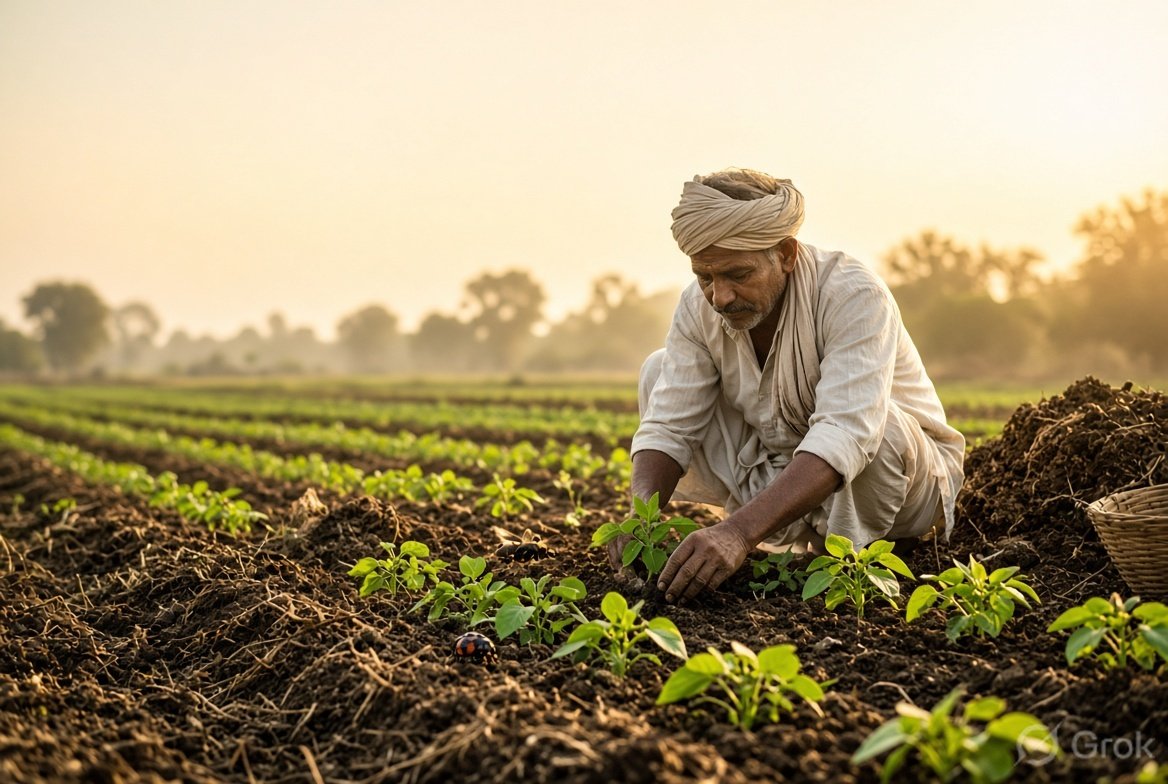
Chemical-Free Farming is an approach to agriculture that aims to reduce or avoid dependence on synthetic chemical fertilizers and pesticides by using natural, biological, and farm-based resources. The basic idea is simple: instead of treating the soil only as a place where crops grow, farmers work to keep the soil alive, productive, and biologically active.
In India, Chemical-Free Farming is closely connected with natural farming, sustainable farming, soil health management, crop diversification, biological inputs, composting, green manuring, mulching, and responsible use of farm resources. ICAR describes natural farming as an ecological approach that uses environment-friendly inputs and practices to improve soil health, biodiversity, and self-sustaining production systems.
Chemical-Free Farming does not simply mean stopping every agricultural input overnight. Good farming is about making the right decision for the crop, soil, climate, and farmer. Soil testing, balanced nutrient management, crop rotation, organic matter, biological inputs, and integrated pest management can all be part of a practical transition toward more sustainable agriculture. ICAR farmer programmes in 2026 have specifically emphasized soil testing, balanced fertilizer use, biological nutrient sources, crop diversification, and reducing excessive dependence on chemical fertilizers.
Why Is Chemical-Free Farming Important?
The health of a farm starts with the soil. Healthy soil supports plant growth, nutrient cycling, water retention, biodiversity, and long-term agricultural productivity. When farming practices continuously disturb this balance, farmers can face problems such as declining soil quality, nutrient imbalance, rising input dependence, and reduced resilience.
This is why soil health has become an important part of sustainable farming discussions in India. During the 2026 Khet Bachao Abhiyan, ICAR programmes across different states focused on soil health conservation, balanced fertilizer use, natural farming, integrated farming, and resource-efficient agriculture.
Pesticide management is also important. The Food and Agriculture Organization notes that pesticide use can create risks for people, animals, and ecosystems, while inappropriate agrochemical use can contribute to contamination of agricultural soils and water resources. Sustainable pest management therefore focuses on protecting crops while reducing unnecessary pesticide risks.
Benefits of Chemical-Free Farming
One of the main benefits of Chemical-Free Farming is its focus on long-term soil health. Practices such as composting, green manuring, mulching, crop residues, and biological inputs can add organic matter and support soil organisms.
Natural farming can also encourage greater biodiversity on the farm. Crop rotation, intercropping, agroforestry, and maintaining useful biological activity can make the farming system more diverse rather than depending on a single crop or one type of input.
Another important consideration is farm economics. Reducing unnecessary external inputs can potentially lower some production costs, particularly where farmers can produce useful biological inputs and organic materials locally. However, the actual economics depend on crop, location, soil condition, labour, market access, and management. Farmers should therefore compare costs and yields rather than assuming that every Chemical-Free Farming system will automatically be more profitable.
Natural Farming Methods for Farmers
Chemical-Free Agriculture can involve several practical methods.
1. Compost and Organic Manure
Compost, farmyard manure, vermicompost, and properly decomposed organic materials can contribute organic matter and nutrients to the soil. These materials should be used according to soil and crop requirements rather than applied blindly.
2. Green Manuring
Green manure crops such as dhaincha can be grown and incorporated into the soil to improve soil organic matter and nutrient cycling. ICAR has highlighted dhaincha-based green manuring as a useful practice for restoring soil health and reducing dependence on chemical fertilizers.
3. Crop Rotation and Diversification
Growing different crops in rotation can help break pest and disease cycles and improve the use of available nutrients. Including legumes, green manure crops, or suitable intercrops can make a farming system more diverse and resilient.
4. Mulching
Mulching helps protect the soil surface from direct heat and rainfall impact and can help conserve moisture. Crop residues and other suitable materials can be used as mulch depending on the farming system.
5. Biological and Natural Inputs
Natural farming systems may use locally prepared biological formulations and other nature-based inputs. ICAR examples include Beejamrit, Jeevamrit, Ghan Jeevamrit, and natural pest-management preparations. These should be prepared and used correctly, with attention to crop requirements and local agricultural guidance.
6. Soil Testing
Chemical-Free Farming should still be scientific farming. Soil testing helps farmers understand nutrient status and make better fertilizer and soil-management decisions. ICAR has repeatedly recommended soil-test-based nutrient management as part of sustainable crop production.
Chemical-Free Farming vs Organic Farming
Chemical-Free Farming and Organic Farming are related, but they should not automatically be treated as identical terms.
Organic farming generally follows defined production standards and certification requirements. Chemical-Free Farming is a broader descriptive term that commonly refers to reducing or avoiding synthetic chemical inputs through natural, biological, and ecological farming practices.
For farmers and consumers, this difference matters. A product should not be marketed as certified organic unless it actually meets the applicable organic standards and certification requirements.
Is Chemical-Free Farming the Future?
The future of agriculture is unlikely to depend on one single farming method. The stronger direction is toward farming systems that protect soil health, use resources efficiently, reduce unnecessary chemical dependence, improve biodiversity, and remain financially practical for farmers.
Recent ICAR programmes show growing emphasis on natural farming, integrated farming systems, balanced nutrient management, crop diversification, green manuring, soil testing, and climate-resilient agriculture.
This means the future of Chemical-Free Farming is not simply about replacing one product with another. It is about changing the way the entire farm is managed.
A farmer may start with soil testing, reduce unnecessary chemical applications, introduce compost or green manure, improve crop rotation, use mulching, encourage beneficial biodiversity, and monitor results from season to season. Such a gradual approach can be more practical than making sudden changes without understanding the soil and crop.
Final Thoughts
Chemical-Free Farming brings agriculture back to an important principle: healthy crops depend on healthy farming systems. The goal is not just to grow a crop for one season, but to maintain productive soil, responsible resource use, biodiversity, and farm sustainability for years to come.
For Indian farmers, Natural Farming, Sustainable Agriculture, soil health management, crop diversification, green manuring, biological inputs, and careful nutrient management provide practical areas to explore. The best approach will always depend on the crop, soil, climate, available resources, and local farming conditions.
The future of farming should therefore be productive, practical, soil-friendly, and sustainable—good for the farmer today while protecting the farm for the generations that will cultivate it tomorrow.