Low Investment Food Business Ideas from Farming: 10 Profitable Home and Village Business Ideas for 2026
Starting a business does not always require lakhs of rupees. In many Indian villages and small towns, people are building profitable businesses from the products they already grow or source from nearby farms. If you are looking for low investment food business ideas, farming can become one of the best starting points.
The biggest advantage of farm-based businesses is that the raw material is often available locally. You do not need a large factory, expensive machinery, or a big team in the beginning. Many successful brands started with a small kitchen, a simple packing setup, and consistent quality.
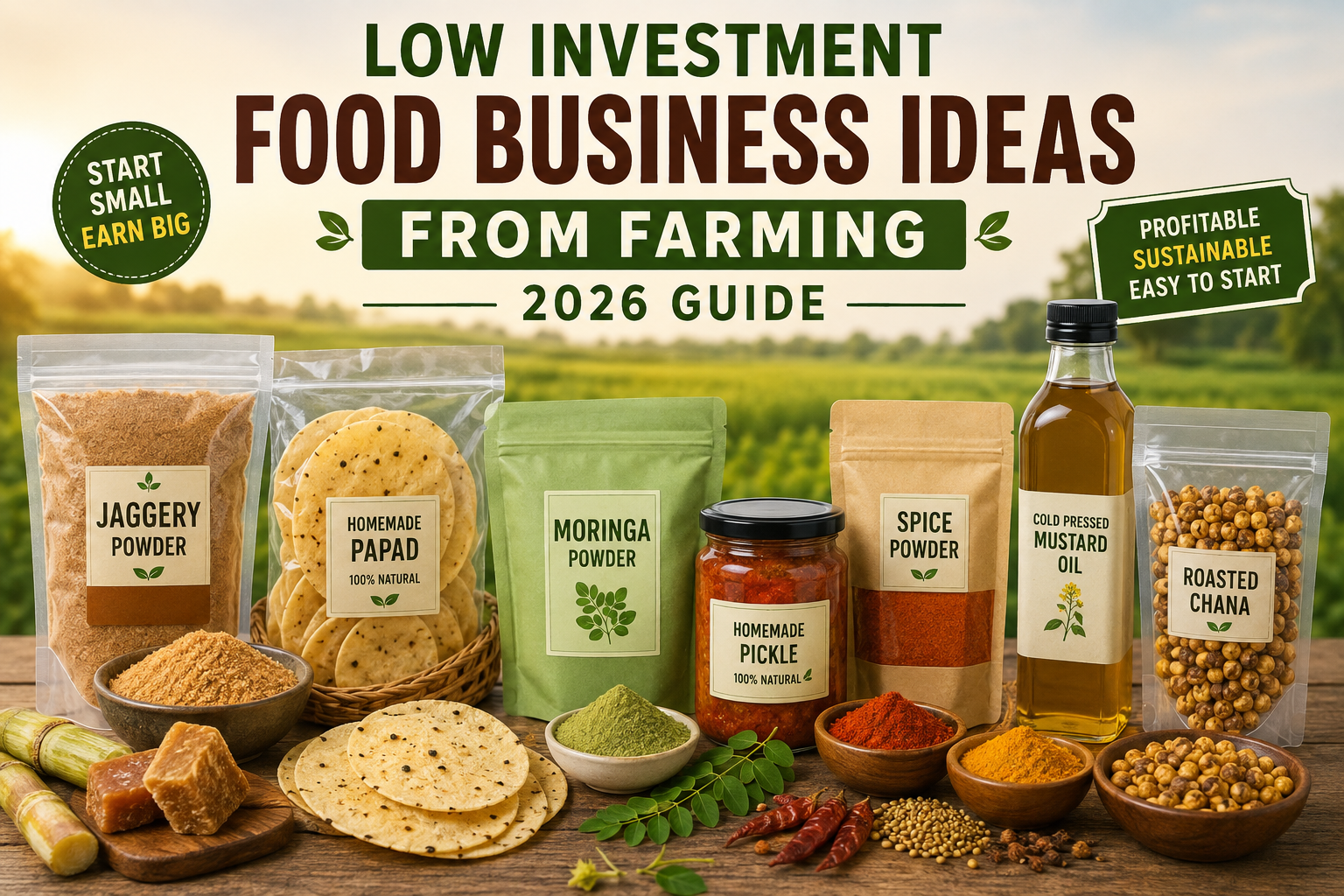
In 2026, the demand for farm to home products is growing faster than ever. People are searching for natural, traditional, and less processed foods. This is why low investment food business ideas related to jaggery, papad, moringa, spices, and pickles have become popular across India.
Why Farming-Based Food Businesses Are Growing in 2026
A few years ago, most people sold raw farm produce. Today, more farmers and small entrepreneurs are earning better profits by selling value-added food products.
For example:
- Sugarcane becomes jaggery powder.
- Moong becomes roasted snacks.
- Moringa leaves become moringa powder.
- Milk becomes ghee.
- Mango becomes pickle.
This simple processing can increase the selling price and improve profit margins.
Another reason is online selling. You can now start a small food business from home and sell through WhatsApp, Instagram, Facebook, Meesho, or local delivery groups. You do not need a physical shop on day one.
If your goal is a profitable farming business, focus on products that are:
- Easy to store
- Easy to pack
- Used daily
- Have repeat customers
1. Jaggery Powder Packing Business
Among all low investment food business ideas, jaggery powder packing is one of the easiest for beginners.

Why it works
People are increasingly replacing refined sugar with jaggery powder for tea, sweets, and daily cooking.
Estimated investment
Jaggery powder
₹1,500
Zip pouches
₹500
Labels
₹300
Sealing machine
₹800–1,200
Total: ₹3,000–4,500
Selling price
- 250 g pack: ₹35–50
- 500 g pack: ₹70–95
- 1 kg pack: ₹130–180
This is a good small food business from home because packing can be done by one or two family members.
2. Papad Business from Home
Papad has strong demand throughout the year, and the investment is low.

Estimated investment
- Dal and spices: ₹2,000
- Rolling tools: ₹500
- Drying sheets: ₹300
- Packing material: ₹700
Total: ₹3,500–5,000
Why it is profitable
Papad has a good margin because the raw material cost is relatively low compared to the final selling price.
You can sell:
- Chana papad
- Moong papad
- Masala papad
- Rajasthani papad
For anyone searching for low investment food business ideas, papad is one of the safest options because the product is familiar, easy to transport, and has repeat demand.
3. Moringa Powder Business
Moringa is becoming popular in both Indian and international health markets.

Estimated investment
- Dried moringa leaves: ₹3,000
- Grinding: ₹1,000
- Pouches and labels: ₹1,000
- Miscellaneous: ₹1,000
Total: ₹6,000–8,000
Why it has potential
Health-conscious customers search for:
- Moringa powder benefits
- Natural nutrition
- Immunity foods
- Plant-based supplements
This is slightly more advanced than jaggery or papad, but it can become a strong profitable farming business if you maintain quality and hygiene.
Which Business Is Best for Beginners?
If you are starting with less than ₹5,000, I would rank these low investment food business ideas in this order:
1
Jaggery powder packingEasiest to start, daily-use product, repeat customers
2
Papad businessHigh margin, strong household demand, easy transport
3
Moringa powderHigher potential but needs better quality control
These businesses work especially well in villages, small towns, and for families who want to build a small food business from home without taking a large financial risk.
we discussed three strong low investment food business ideas: jaggery powder packing, papad business, and moringa powder. Now let us look at more practical businesses that can be started from a home kitchen or a small village setup with limited money.
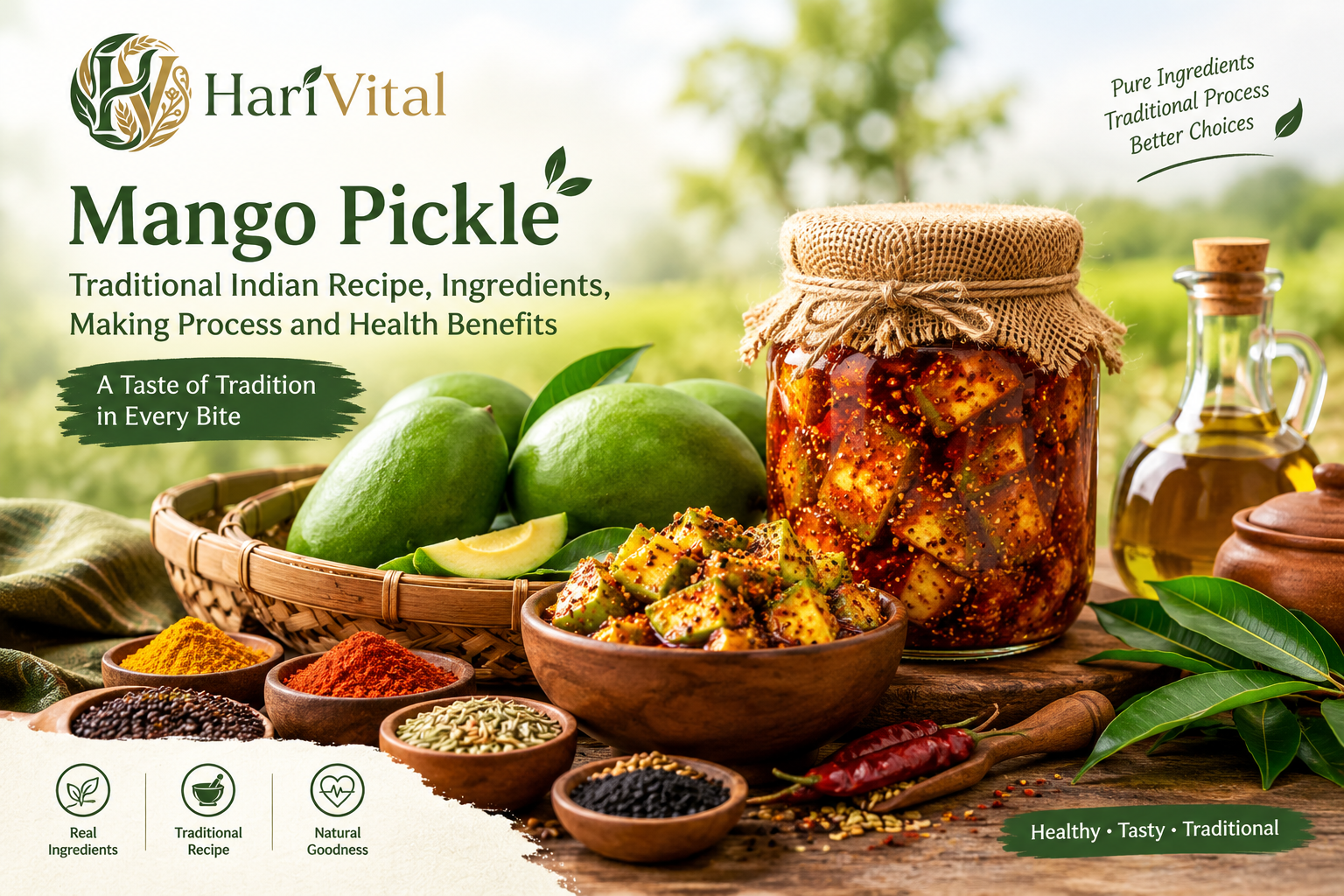
4. Homemade Pickle Business
Pickles are one of the easiest small food business from home options because almost every Indian household uses them.

Estimated investment
- Raw mango or lemon: ₹1,500
- Oil and spices: ₹1,200
- Jars and labels: ₹800
- Miscellaneous: ₹500
Total: ₹4,000–5,000
Selling price
- 250 g jar: ₹80–120
- 500 g jar: ₹150–220
Traditional homemade taste can help this become a profitable farming business when sold through WhatsApp groups and local customers.
5. Spice and Masala Packing Business
If you have access to good-quality spices, this is one of the most scalable low investment food business ideas.

Estimated investment
- Spices: ₹2,000
- Grinding: ₹500
- Pouches: ₹700
- Labels: ₹300
Total: ₹3,500–4,000
Popular products
- Turmeric powder
- Red chilli powder
- Coriander powder
- Garam masala
Small 100 g and 200 g packs sell well and support repeat customers.
6. Roasted Chana and Healthy Snack Business
Healthy snacks are growing quickly in urban and rural markets.

Estimated investment
- Chana: ₹1,500
- Roasting and seasoning: ₹500
- Packing: ₹700
Total: ₹2,700–3,000
Why it works
- Long shelf life
- Easy transport
- Daily snack demand
This is an excellent food business under 10000 and can be combined with peanuts, moong, or millet snacks.
7. Cold-Pressed Oil Repacking
If local farmers already produce mustard or sesame oil, you can buy in bulk and repack in smaller bottles.

Estimated investment
- Bulk oil: ₹4,000
- Bottles: ₹1,200
- Labels: ₹400
Total: ₹5,500–6,000
Focus on farm to home products and transparent sourcing. Customers often pay more for trusted local oil.
Investment vs Profit Comparison
Here is a practical comparison of these low investment food business ideas.
| Business | Investment | Monthly Profit |
|---|---|---|
| Jaggery Powder | ₹4,000 | ₹5,000–12,000 |
| Papad | ₹5,000 | ₹8,000–15,000 |
| Moringa Powder | ₹8,000 | ₹10,000–25,000 |
| Pickle | ₹5,000 | ₹6,000–14,000 |
| Spice Packing | ₹4,000 | ₹5,000–10,000 |
| Roasted Chana | ₹3,000 | ₹4,000–9,000 |
| Oil Repacking | ₹6,000 | ₹6,000–13,000 |
These are realistic small-scale estimates for beginners, not guaranteed income.
How to Start a Small Food Business from Home
Many people overcomplicate the process. Start with these simple steps.
Step 1
Choose one product only
Step 2
Make 10–20 trial packs
Step 3
Get feedback from family and neighbors
Step 4
Create a simple label with name and weight
Step 5
Take clear photos in daylight
Step 6
Start selling on WhatsApp and Instagram
For most beginners, this is the fastest way to test low investment food business ideas without wasting money on large stock.
A Simple Beginner Strategy
If I were starting today with ₹5,000, I would choose:
Jaggery powder
10 packs
Papad
10 packs
Roasted chana
10 packs
This creates a small farm to home products combo with low risk and good repeat potential.
How to Sell Farm to Home Products
Many beginners think production is the hardest part. In reality, selling consistently is what builds a profitable farming business.
Start with local trust, then move to online selling.
Local selling
- Friends and family
- Neighbours
- Local grocery stores
- Tea stalls
- Small supermarkets
- Weekly village markets
Online selling
- WhatsApp Status
- WhatsApp groups
- Instagram page
- Facebook page
- Meesho
- Amazon (later stage)
For farm to home products, clear photos and honest descriptions matter more than expensive advertising.

A Simple WhatsApp Selling Strategy
This is the easiest method for a small food business from home.
Day 1
Post product photo
Day 2
Share one benefit
Day 3
Show packing process
Day 4
Share customer feedback
Day 5
Offer combo pack
This creates trust without spending money on ads.
Packaging Tips That Increase Sales
Good packaging can make even a small product look professional.

Use
- White zip pouches
- Clear labels
- Net quantity
- Packed date
- Best before
- FSSAI number (if applicable)
Avoid
- Handwritten labels
- Blurry printing
- Too many colors
- False health claims
Do You Need FSSAI?
If you are making and selling food products in India, even on a small scale, FSSAI registration is generally required. Small food businesses can apply through the official FoSCoS portal. The portal provides registration and license options based on the nature and scale of the food business.

FSSAI+1
For small manufacturers, home-based food businesses, petty retailers, and similar tiny food businesses, basic registration is the relevant starting category under the FSSAI framework.
FSSAI+1
Official portal: FSSAI FoSCoS
Common Mistakes That Reduce Profit
These mistakes are very common in low investment food business ideas.
Making too much stockStart with small batches
Ignoring hygieneCleanliness builds repeat customers
Underpricing productsKeep a healthy profit margin
No customer feedbackAsk every buyer for a review
Too many products at onceBegin with one or two products
Which Business Is Best for ₹5,000?
Jaggery powder
₹2,500
Papad
₹1,500
Roasted chana
₹1,000
This is one of the safest food business under 10000 combinations.
Which Business Is Best for ₹10,000?
Moringa powder
₹4,000
Pickle business
₹3,000
Spice packing
₹3,000
This gives better branding potential and higher margins.
A 30-Day Beginner Plan
Week 1
- Choose one product
- Buy raw material
- Design simple label
Week 2
- Make 20 packs
- Take photos
- Create WhatsApp and Instagram pages
Week 3
- Start selling locally
- Collect feedback
- Improve packaging
Week 4
- Introduce combo packs
- Ask for reviews
- Reinvest first profit
This step-by-step approach is ideal for anyone searching for low investment food business ideas with minimal risk.
Final Thoughts
The best business is not the one with the highest investment. It is the one that has repeat customers, simple operations, and consistent quality.
For most beginners in villages and small towns, I would recommend starting with:
1Jaggery Powder
2Papad
3Spice Packing
These three products are affordable, easy to store, easy to ship, and fit perfectly into the growing farm to home products market.
If you stay patient, maintain hygiene, and focus on customer trust, these low investment food business ideas can slowly grow from a home setup into a strong local brand in 2026 and beyond.