
Gut Health: The Complete Guide to Better Digestion, Probiotics, and a Healthier Life
Introduction
Gut health , probiotics for gut health is one of the most important foundations of overall health. A healthy gut does much more than digest food—it influences your immune system, energy levels, metabolism, skin, mental well-being, and even heart health. Scientists now recognize that the trillions of microorganisms living inside your digestive tract, collectively known as the gut microbiome, play a vital role in keeping your body healthy.
In today’s fast-paced lifestyle, many people experience digestive issues without realizing that poor gut health may be the underlying cause. Frequent bloating, constipation, diarrhea, acidity, gas, food intolerances, unexplained fatigue, skin problems, and weakened immunity are often linked to an unhealthy digestive system. Fortunately, with the right diet, healthy habits, and the proper use of probiotics for gut health, many people can naturally support a healthier digestive system.
This comprehensive guide explains everything you need to know about gut health, including how the digestive system works, why the gut microbiome matters, common symptoms of poor gut health, and the role of probiotics and gut health in supporting overall wellness. Whether you want to improve digestion, boost immunity, or simply maintain a healthier lifestyle, this guide will help you understand the science behind a healthy gut.
What Is Gut Health?
Gut health refers to the overall health and proper functioning of your digestive system, especially your stomach, intestines, and the trillions of beneficial microorganisms that live inside them. A healthy gut efficiently digests food, absorbs nutrients, removes waste, and supports many essential body functions.
Your digestive system is not simply a tube that processes food. It is a highly sophisticated network that communicates with your immune system, nervous system, hormones, and brain. Researchers often describe the gut as the body’s “second brain” because of the constant communication between the digestive tract and the central nervous system.
When your gut is healthy:
- Food is digested efficiently.
- Nutrients are absorbed properly.
- Harmful bacteria remain under control.
- Beneficial bacteria flourish.
- Inflammation stays balanced.
- Your immune system functions more effectively.
- Energy production improves.
When gut health becomes unbalanced, the body may experience digestive discomfort as well as symptoms that seem unrelated to digestion, such as skin problems, mood changes, or persistent tiredness.
Understanding the Gut Microbiome
One of the most fascinating discoveries in modern medicine is the importance of the gut microbiome.
The gut microbiome consists of trillions of bacteria, fungi, viruses, and other microorganisms living primarily inside your large intestine. While the word “bacteria” often sounds harmful, many of these microorganisms are beneficial and essential for good health.
A balanced gut microbiome helps your body:
- Digest complex foods.
- Produce certain vitamins.
- Support immune function.
- Protect against harmful microbes.
- Maintain the intestinal barrier.
- Regulate inflammation.
- Support communication between the gut and the brain.
Problems begin when harmful bacteria grow faster than beneficial bacteria. This imbalance may occur because of poor diet, chronic stress, lack of sleep, excessive antibiotics, smoking, alcohol, or certain medical conditions.
Why Gut Health Is Important
Many people think digestion is the only responsibility of the gut. In reality, gut health affects nearly every major system in the body.
1. Better Digestion
A healthy digestive system breaks down carbohydrates, proteins, and fats efficiently while helping your body absorb essential nutrients.
2. Stronger Immune System
A significant portion of the immune system is associated with the digestive tract. A balanced gut microbiome helps the body respond appropriately to harmful microorganisms while maintaining immune balance.
3. Increased Energy
Proper digestion allows your body to obtain vitamins, minerals, and calories efficiently, helping maintain healthy energy levels throughout the day.
4. Healthier Skin
Research suggests that digestive health may influence certain skin conditions. While gut health is not the sole cause of skin problems, maintaining a healthy digestive system can support overall skin wellness.
5. Brain and Mental Well-Being
Scientists continue to study the gut-brain axis, the communication network between your digestive system and your brain. A healthy gut may contribute to overall mental well-being as part of a healthy lifestyle.
6. Healthy Weight Management
Good digestion supports nutrient balance, appetite regulation, and healthy metabolism. Combined with proper nutrition and exercise, healthy gut habits may support weight management.
How the Digestive System Works
To understand gut health, it helps to know how your digestive system processes food.
Mouth
Digestion begins as soon as you chew. Saliva starts breaking down carbohydrates before food even reaches your stomach.
Esophagus
Food travels through the esophagus into the stomach.
Stomach
The stomach mixes food with digestive acids and enzymes that begin breaking down proteins and preparing food for the small intestine.
Small Intestine
Most nutrient absorption occurs here. Vitamins, minerals, amino acids, healthy fats, and other nutrients enter the bloodstream.
Large Intestine
The large intestine absorbs water while housing most of the beneficial bacteria that make up your gut microbiome. These microorganisms help ferment dietary fiber and produce compounds that support digestive health.
What Are Probiotics?
Probiotics for gut health are live microorganisms that, when consumed in appropriate amounts, may help support a healthy balance of beneficial bacteria in the digestive system.
They are commonly found in fermented foods and certain dietary supplements.
Examples include:
- Yogurt with live cultures
- Kefir
- Kimchi
- Sauerkraut
- Miso
- Tempeh
- Fermented vegetables
Different probiotic strains perform different functions, which is why no single probiotic is ideal for every individual or every health concern.
Probiotics and Gut Health
The relationship between probiotics and gut health has been widely studied. Probiotics may help restore the balance of gut bacteria, particularly after disruptions such as certain illnesses or antibiotic use.
Potential benefits of probiotics may include:
- Supporting digestive balance.
- Helping maintain a healthy gut microbiome.
- Assisting normal bowel function.
- Supporting immune health.
- Helping restore bacterial diversity after antibiotics.
However, responses vary between individuals, and probiotics are not a cure for digestive diseases. Choosing the right strain and seeking medical advice when symptoms persist is important.
Key Takeaways
A healthy gut is much more than a healthy stomach. It is a complex ecosystem that supports digestion, immunity, nutrient absorption, and many aspects of overall well-being. Understanding how the digestive system works and how probiotics for gut health may support a balanced microbiome is the first step toward making healthier daily choices.
In the next part of this guide, we’ll explore the early signs and symptoms of poor gut health, common causes of digestive imbalance, who is most at risk, and practical ways to recognize when your gut may need extra attention.
Signs, Causes, and Risk Factors of Poor Gut Health
A healthy digestive system works quietly in the background. Most people rarely think about their gut health until they begin experiencing symptoms such as bloating, constipation, stomach discomfort, or frequent digestive upset. However, poor gut health can affect much more than digestion. Because the gut microbiome interacts with many systems throughout the body, an imbalance may influence overall well-being.
This section explains the most common signs of poor gut health, what may contribute to digestive imbalance, and who may be more likely to develop gut-related problems.
What Are the Signs of Poor Gut Health?
Your body often gives early warning signs when your digestive system is not functioning optimally. While these symptoms do not always mean there is a serious medical condition, persistent or severe symptoms should be evaluated by a qualified healthcare professional.
1. Frequent Bloating
Occasional bloating is common, especially after large meals. However, persistent bloating may suggest that food is not being digested efficiently or that the balance of bacteria in the gut has changed.
Common triggers include:
- Eating too quickly
- Highly processed foods
- Carbonated beverages
- Low-fiber diets
- Digestive disorders
2. Constipation
Constipation is one of the most common digestive complaints worldwide.
Possible contributing factors include:
- Low fiber intake
- Inadequate hydration
- Physical inactivity
- Certain medications
- Changes in the gut microbiome
Maintaining healthy gut health often includes regular bowel movements supported by a balanced diet and adequate fluid intake.
3. Diarrhea
Frequent diarrhea may temporarily disrupt the gut microbiome by reducing beneficial bacteria. If diarrhea lasts more than a few days or is accompanied by fever, dehydration, or blood in the stool, medical evaluation is important.
4. Excessive Gas
Gas is a normal part of digestion. However, excessive gas, abdominal discomfort, or foul-smelling gas on a regular basis may indicate that certain foods are not being digested efficiently.
5. Acid Reflux and Indigestion
Heartburn, indigestion, and acid reflux may occur for many reasons, including eating habits, excess body weight, certain foods, or digestive disorders.
Improving eating habits and supporting gut health may help reduce digestive discomfort for some individuals.
6. Food Intolerances
People sometimes notice that certain foods repeatedly trigger digestive discomfort.
Common examples include:
- Dairy
- Gluten-containing foods (for some individuals)
- High-fat meals
- Artificial sweeteners
- Spicy foods
Food intolerance is different from a food allergy and should be evaluated appropriately if symptoms continue.
7. Feeling Tired Frequently
The digestive system plays a role in absorbing nutrients needed for normal energy production.
Poor nutrition, digestive problems, or certain medical conditions may contribute to fatigue.
8. Changes in Appetite
Unexpected changes in appetite, feeling unusually full, or experiencing frequent cravings may sometimes be associated with digestive health, although many other factors can also contribute.
What Causes Poor Gut Health?
There is rarely one single cause. Instead, poor gut health usually develops because of multiple lifestyle, dietary, and environmental factors.
Poor Diet
One of the biggest contributors is a diet high in:
- Ultra-processed foods
- Added sugars
- Refined carbohydrates
- Deep-fried foods
- Excessive alcohol
These eating patterns may reduce dietary diversity and negatively affect the gut microbiome.
Low Fiber Intake
Dietary fiber feeds many beneficial bacteria living in the digestive system.
Good sources include:
- Fruits
- Vegetables
- Whole grains
- Legumes
- Seeds
- Nuts
A fiber-rich diet supports both digestion and probiotics and gut health by helping beneficial microbes thrive.
Excessive Antibiotic Use
Antibiotics can be life-saving when prescribed appropriately, but they may also reduce beneficial bacteria along with harmful bacteria.
After completing antibiotics, many people focus on nutritious foods and, when appropriate, discuss probiotics for gut health with their healthcare provider.
Chronic Stress
Stress affects the communication between the brain and the digestive system.
Long-term stress may contribute to:
- Digestive discomfort
- Changes in bowel habits
- Appetite changes
- Increased stomach sensitivity
Managing stress is an important part of supporting healthy digestion.
Poor Sleep
Consistently inadequate sleep may influence many body systems, including digestive function and the balance of the gut microbiome.
Adults should generally aim for sufficient, high-quality sleep as recommended for their age and health status.
Lack of Physical Activity
Regular physical activity supports overall health and may contribute to healthy digestion.
Even simple activities such as daily walking can be part of a gut-friendly lifestyle.
Smoking and Excessive Alcohol
Smoking and heavy alcohol consumption have been associated with negative effects on digestive health and the gut microbiome.
Reducing or avoiding these habits supports overall wellness.
Who Is More Likely to Experience Gut Health Problems?
Digestive issues can affect people of any age.
Certain groups may be more likely to experience digestive imbalance.
Adults with Busy Lifestyles
Irregular meals, fast food, stress, and lack of sleep can all influence gut health.
Older Adults
As people age, digestive function and the gut microbiome naturally change, making balanced nutrition increasingly important.
People Taking Certain Medications
Some medications, including antibiotics, may influence digestion or alter the balance of gut bacteria.
Always follow medical advice regarding prescribed medications.
People with Highly Processed Diets
A diet lacking fruits, vegetables, legumes, and whole grains provides less fiber to support beneficial gut bacteria.
Individuals Under Chronic Stress
Long-term emotional stress can affect digestive comfort through the gut-brain connection.
Lifestyle Habits That Can Support Gut Health
Healthy daily habits often work together to support digestion.
These include:
- Eating a balanced diet rich in fiber.
- Drinking enough water.
- Staying physically active.
- Managing stress.
- Getting adequate sleep.
- Limiting ultra-processed foods.
- Including fermented foods when appropriate.
- Considering probiotics for gut health if recommended by a healthcare professional.
Can Poor Gut Health Be Prevented?
In many cases, healthy lifestyle choices may help maintain digestive wellness.
Simple habits can make a meaningful difference over time:
- Eat a variety of colorful plant foods.
- Avoid unnecessary antibiotics.
- Exercise regularly.
- Sleep consistently.
- Stay hydrated.
- Reduce chronic stress.
- Eat meals at regular times.
- Chew food slowly.
These habits not only support digestion but also contribute to overall health.
Best Foods, Probiotics, and Natural Ways to Improve Gut Health
Improving gut health does not require expensive treatments or complicated diets. In most cases, small and consistent lifestyle changes can make a significant difference over time. The foods you eat every day directly influence your gut microbiome, digestion, and overall well-being.
This section explores the best foods for gut health, the role of probiotics for gut health, prebiotic-rich foods, hydration, exercise, stress management, and Ayurvedic practices that support healthy digestion.
Best Foods for Gut Health
A healthy gut begins with a balanced, nutrient-rich diet. Eating a wide variety of whole foods provides beneficial bacteria with the nutrients they need to thrive.
1. Fiber-Rich Foods
Dietary fiber is one of the most important nutrients for maintaining gut health. Unlike other nutrients, fiber reaches the large intestine where beneficial gut bacteria use it as a food source.
Excellent fiber-rich foods include:
- Apples
- Pears
- Bananas
- Oats
- Brown rice
- Lentils
- Chickpeas
- Kidney beans
- Flaxseeds
- Chia seeds
Regular fiber intake supports healthy digestion, bowel regularity, and a balanced gut microbiome.
2. Fermented Foods
Fermented foods naturally contain beneficial microorganisms that may support probiotics and gut health.
Popular fermented foods include:
- Yogurt with live cultures
- Kefir
- Kimchi
- Sauerkraut
- Miso
- Tempeh
- Fermented vegetables
Including fermented foods as part of a balanced diet may help increase microbial diversity.
3. Fruits That Support Gut Health
Many fruits provide fiber, antioxidants, vitamins, and water that support digestive wellness.
Some excellent choices include:
- Apples
- Bananas
- Papaya
- Kiwi
- Berries
- Oranges
- Pomegranate
Eating different fruits throughout the week helps provide a variety of nutrients.
4. Vegetables for Better Digestion
Vegetables contain vitamins, minerals, antioxidants, and fiber that nourish beneficial gut bacteria.
Recommended vegetables include:
- Broccoli
- Spinach
- Carrots
- Beetroot
- Cabbage
- Pumpkin
- Sweet potato
- Green beans
Aim to include colorful vegetables in daily meals.
5. Whole Grains
Whole grains provide more fiber than refined grains.
Healthy options include:
- Oats
- Brown rice
- Quinoa
- Whole wheat
- Barley
- Millet
Replacing refined grains with whole grains can support healthier digestion.
What Are Prebiotics?
While probiotics for gut health add beneficial microorganisms, prebiotics feed the good bacteria already living inside your digestive system.
Prebiotic-rich foods include:
- Garlic
- Onion
- Leeks
- Asparagus
- Oats
- Chicory root
- Bananas
- Apples
Combining prebiotic and probiotic foods supports a balanced gut microbiome.
Best Probiotics for Gut Health
Research suggests that different probiotic strains may support different aspects of digestive health.
Common probiotic groups include:
- Lactobacillus
- Bifidobacterium
- Saccharomyces boulardii
Because probiotic supplements vary in formulation, it is best to choose products with evidence-based strains and consult a healthcare professional if you have ongoing digestive issues or underlying medical conditions.
Foods That May Negatively Affect Gut Health
No single food is harmful for everyone, but regularly eating large amounts of certain foods may negatively influence digestive health.
Examples include:
- Highly processed foods
- Excess added sugar
- Sugary drinks
- Deep-fried foods
- Excess alcohol
- Processed meats
- Excess refined carbohydrates
Moderation and dietary balance are more sustainable than eliminating entire food groups without medical advice.
Drink Enough Water
Water plays an essential role in digestion.
Adequate hydration helps:
- Support bowel regularity
- Aid digestion
- Maintain healthy stool consistency
- Support nutrient absorption
Daily water needs vary depending on age, climate, activity level, and health status.
Exercise and Gut Health
Regular physical activity benefits many aspects of health, including digestion.
Exercise may help:
- Support bowel movement regularity
- Improve metabolism
- Reduce stress
- Promote overall digestive function
Examples include:
- Walking
- Cycling
- Swimming
- Yoga
- Strength training
Even 30 minutes of moderate activity on most days can contribute to better overall health.
Sleep and Gut Health
Sleep and digestion are closely connected.
Poor sleep may affect:
- Appetite regulation
- Hormonal balance
- Digestive comfort
- The gut microbiome
Most adults benefit from consistent, high-quality sleep each night.
Stress Management
The gut and brain communicate continuously through the gut-brain axis.
Long-term stress may contribute to digestive discomfort.
Healthy stress-management practices include:
- Meditation
- Deep breathing
- Yoga
- Reading
- Spending time outdoors
- Mindfulness
- Talking with supportive friends or family
Reducing stress supports both mental well-being and gut health.
Ayurvedic Perspective on Gut Health
In Ayurveda, healthy digestion is considered one of the foundations of good health.
The concept of Agni, often translated as “digestive fire,” refers to the body’s ability to digest food efficiently. Ayurveda emphasizes balanced meals, regular eating habits, proper sleep, physical activity, and mindful eating as important lifestyle practices.
Common herbs traditionally used in Ayurvedic practice include:
- Ginger
- Amla
- Triphala
- Fennel
- Cumin
- Coriander
- Ajwain
- Turmeric
These herbs have a long history of traditional use. However, they should not be considered substitutes for medical treatment, and individuals with health conditions or those taking medications should seek professional advice before using herbal supplements.
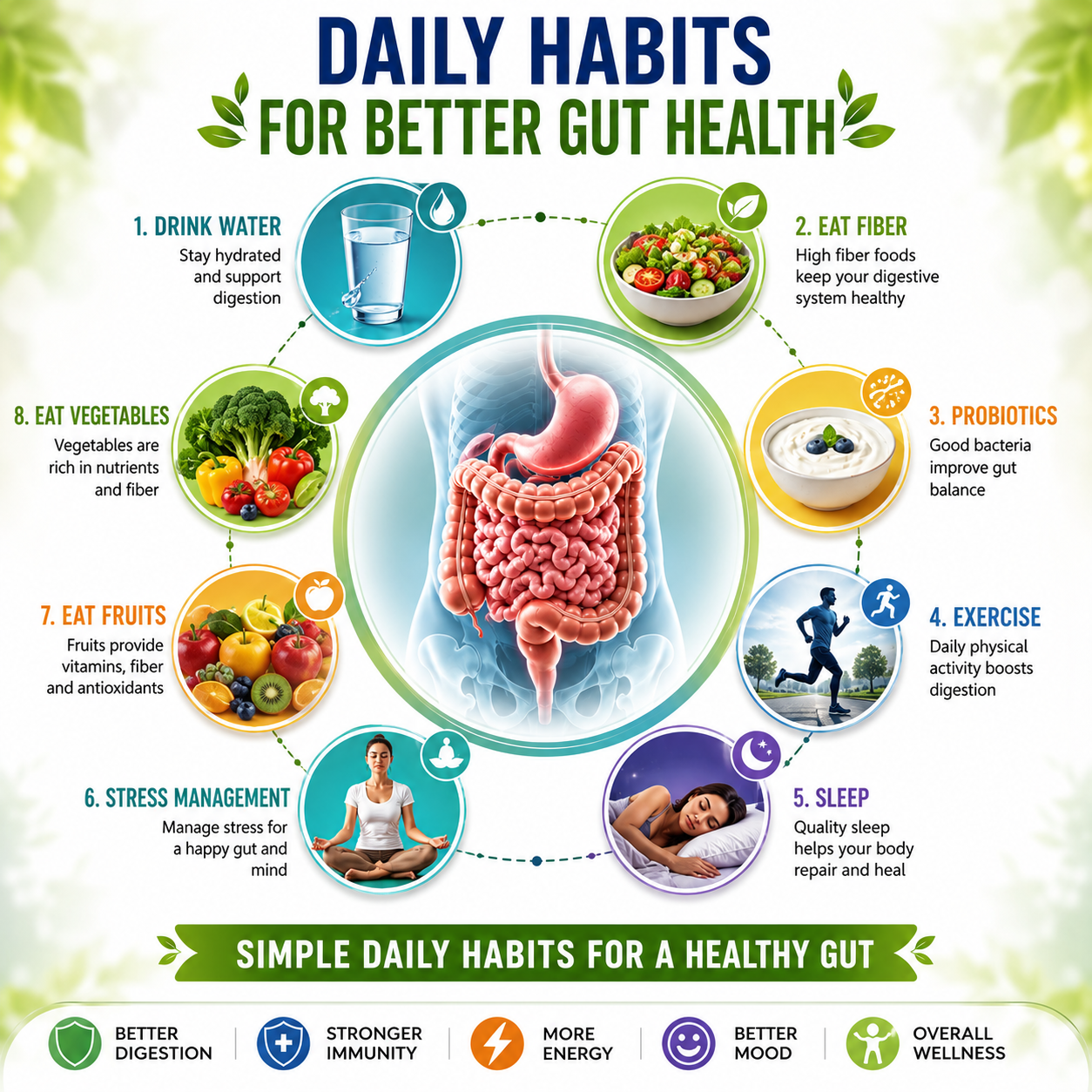
Daily Habits That Support Gut Health
Small daily habits often have a greater long-term impact than occasional drastic changes.
Healthy habits include:
- Eat meals at regular times.
- Chew food thoroughly.
- Include fiber in every meal.
- Eat a variety of fruits and vegetables.
- Stay hydrated.
- Limit ultra-processed foods.
- Include fermented foods regularly if suitable.
- Stay physically active.
- Sleep consistently.
- Manage stress effectively.
- Avoid smoking.
- Limit alcohol consumption.
Consistency is more important than perfection.
Frequently Asked Questions
How long does it take to improve gut health?
Some people notice digestive improvements within a few weeks of adopting healthier eating habits, while broader changes to the gut microbiome may take longer. Individual results vary.
Are probiotics necessary for everyone?
Not necessarily. Many people can support gut health through a balanced diet that includes fiber-rich and fermented foods. Probiotic supplements may be appropriate in certain situations, but they are not essential for everyone.
Can children have gut health problems?
Yes. Children can experience digestive issues, but persistent symptoms should always be evaluated by a qualified healthcare professional.
Can stress affect digestion?
Yes. The gut-brain connection means that chronic stress can influence digestive comfort and bowel habits.
Conclusion
Healthy gut health is built through consistent lifestyle choices rather than quick fixes. Eating a diverse, fiber-rich diet, including fermented foods, staying active, getting enough sleep, managing stress, and understanding the role of probiotics for gut health can all contribute to long-term digestive wellness.
A healthy digestive system supports much more than digestion—it helps maintain nutrient absorption, immune function, energy levels, and overall quality of life. By making informed daily choices, you can create an environment where your gut microbiome thrives and your body functions at its best.
Wikipedia – Digestive System: https://en.wikipedia.org/wiki/Digestive_system
Wikipedia – Gut Microbiota: https://en.wikipedia.org/wiki/Gut_microbiota